
Erik Aller, Ph.D.
Organizational Coach and Team Intervention Specialist
Organizational Coaching for Complex Collaboration and Leadership
For directors, executives, entrepreneurs, managers, and HR professionals who are responsible for collaboration, leadership, or organizational development.
Collaboration is always linked to leadership and organization

Depending on the issue at hand, I work with executive boards, management teams, partners, leaders, and teams. I examine what fosters collaboration, where it breaks down, and what this requires in terms of roles, decision-making, accountability, and the organization’s structure.
This may be necessary when tensions keep resurfacing. Even well-functioning executive teams and workgroups call on me to help them clarify what they want to preserve, where they are vulnerable, and what the next phase will require of them.
When clients hire me
The reasons vary. Sometimes it’s clear that collaboration has stalled. Other times, a management team or group wants to deliberately reflect on its own performance before problems arise.
Clients contact me, among other things, when:
- the same tensions or conflicts keep recurring;
- Discussions are taking place, but behavior and implementation are hardly changing;
- decisions are reopened after they have already been made;
- roles and responsibilities are clearly defined on paper, but work differently in practice;
- informal influence carries more weight than formal leadership;
- board members, managers, or partners disagree on the direction, position, or responsibilities;
- A well-functioning team wants to explore what supports collaboration and where it is vulnerable;
- a change in mission, scope, leadership, or composition requires new decisions.
Strategy sessions and retreats can also serve as a catalyst. In those cases, it’s about more than just setting a direction. Decisions must be translated into priorities, assigned to specific individuals, and followed up on.
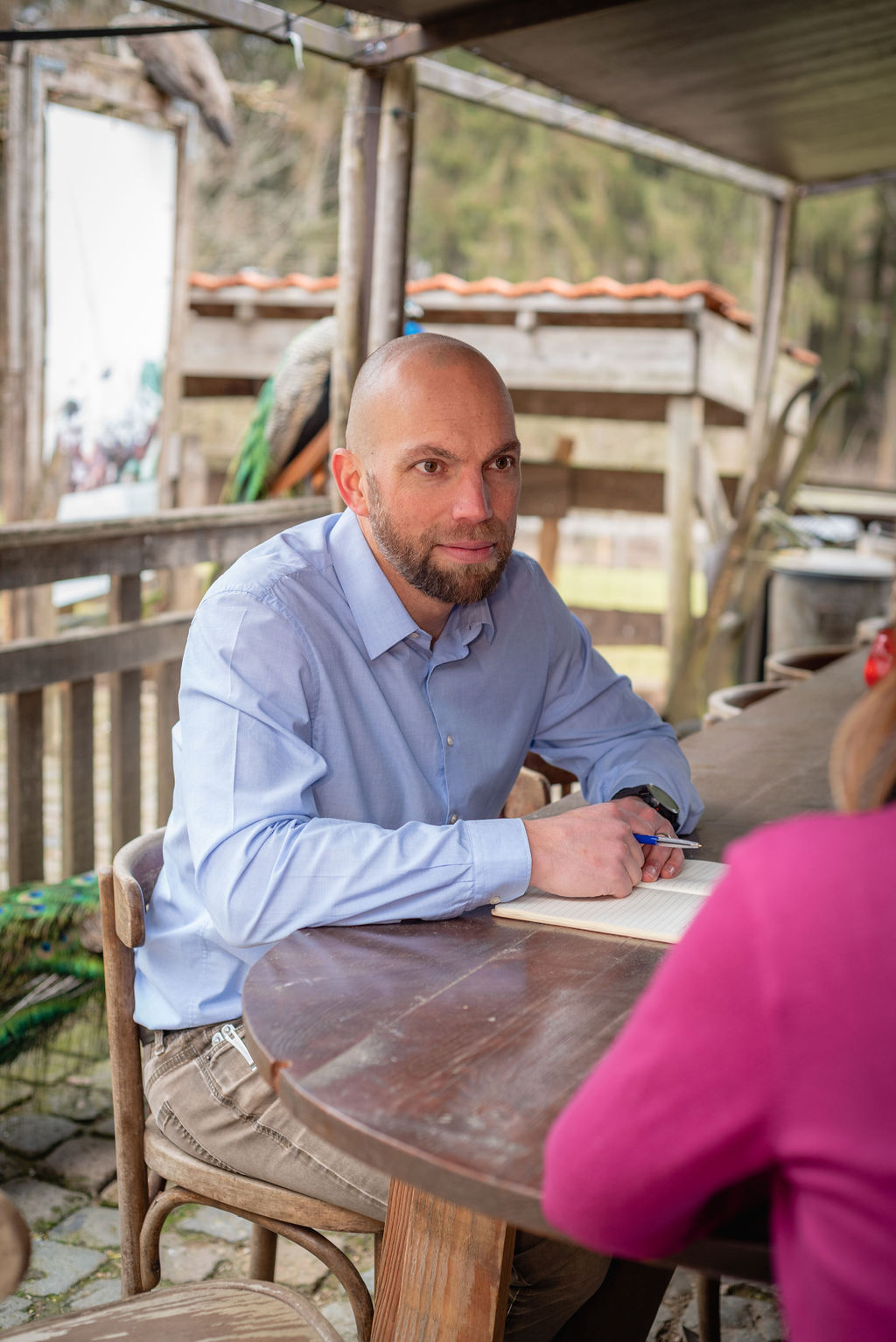
The nature of the situation determines the type of guidance provided. A stalled collaboration requires a different approach than a management team that wants to critically examine its own working methods from a solid foundation.
Behavior doesn't tell the whole story
What becomes apparent within a team or executive board is often only part of the issue.
Irritation, reluctance, conflicts, and broken promises are symptoms. Underlying these may be established patterns. People put off making decisions. Differences are carefully glossed over. A manager solves problems on their own. Responsibility gets stuck in the gap between roles.
These patterns are partly shaped by the context. Mandates are unclear, consultation structures no longer align with the mission, or different managers have different expectations. Sometimes employees have a formal role but lack the authority to carry it out properly. In such cases, informal relationships determine who actually has influence.
That is why I look at the behavior that becomes apparent, as well as the leadership and the organization that enable that behavior.
When working with high-performing management teams and staff, I examine what supports their collaboration. Which working methods were consciously chosen? What relies primarily on experience or personal commitment? What should be preserved, and what becomes vulnerable when circumstances change?
My role is to clarify and bring to the surface issues that those involved tend to avoid or have come to take for granted. This guidance is then translated into practical choices, clear accountability, and a realistic follow-up process.
how i can help
Interventions When Collaboration Stalls
I am called in when the same tension, the same conflict, or the same avoidance pattern keeps recurring. The issue has often already been discussed. Sometimes agreements have been made or individual employees have been spoken to. Yet the situation has not improved enough.
Read more
I investigate what is actually happening and what factors are perpetuating this pattern. Which issues are being left unaddressed? Who is taking responsibility, and who is taking a wait-and-see approach? What impact do leadership, the division of tasks, and past events have?
An intervention may require a direct discussion about differences, setting boundaries on behavior, or redistributing responsibilities. Sometimes the most important task lies with the team. In other situations, management must make clearer decisions, or the organization of the work must be adjusted.
This is not a general team-building day. There is a specific situation that calls for a targeted approach.
Executive Teams, Management Teams, and Partners
Disagreements at the top trickle down through the rest of the organization.
When executives, managers, or partners have differing views on direction, positioning, or responsibility, conflicting signals arise. Decisions are delayed, employees try to find common ground between the various viewpoints, or important issues get bogged down in personal disputes.
Read more
I facilitate discussions on joint leadership, decision-making, portfolio allocation, mutual accountability, and ownership.
Not every difference needs to be resolved. However, it must be clear which differences are manageable, where a decision is needed, and who remains responsible for what.
Even well-functioning executive boards and management teams can periodically take a critical look at how they work together. For example, when entering a new strategic phase, expanding the organization, or undergoing a change in composition.
Leadership, Roles, and Responsibility
A job description does not make it clear how leadership is carried out in practice.
A manager may be formally responsible but lack sufficient authority. An experienced employee can exert a great deal of influence without being held accountable for the big picture. A manager may take on so much that others hardly have to bear any responsibility at all.
Read more
I examine how the formal structure relates to day-to-day operations.
Who makes decisions? Who is held accountable? When is action escalated? What happens when agreements are not carried out? And does the level of responsibility someone bears align with the autonomy that person is given?
Coaching can focus on an individual manager, a management team, or the relationship between leadership and the team. Roles should not merely be defined; they must be actionable and applied consistently.
Strategy and Organizational Development
Strategy requires more than just a substantive discussion about direction.
I facilitate strategy and retreat sessions in which decisions must be made regarding direction, priorities, and organization. These sessions also focus on the consequences of those decisions. Who will be responsible? What needs to be discontinued? Which decisions require further elaboration? How will implementation be monitored?
Read more
In the field of organizational development, I also work with executive teams and teams that want to take a critical look at their own performance. They want to understand what works well, where they are too dependent on individuals, and what the next phase requires in terms of leadership and collaboration.
In change initiatives, I examine whether the desired behavior aligns with roles, authorities, and existing consultation structures. New expectations have little meaning if the organization’s structure continues to support old ways of operating.
“Erik didn’t offer off-the-shelf modules, but we worked together to develop suitable ideas and implement them. This also ensured that we always found solutions to our challenges that were tailored to our company’s needs.”
Heike Bache
Managing Director
CRONIMET Holland B.V.
“As a facilitator and coach during our team-building day(s), Erik helped the teams discover for themselves what their strengths are and what areas could be improved. Those observations were always subtly supported by the results of the activities in which we worked together toward a common goal.”
Maud Doveren
Director
Zuyd Professional
“Erik has a unique coaching style: sharp, engaged, and precisely tailored to what a team needs. With his experience-based approach and effective interventions, he helped my management team slow down, delve deeper, and have a genuine conversation.”
Rini Adriaanse
Support Manager
Insurance & Pensions
Rabobank
Approach
1. Clarifying the Assignment and Rationale
During the initial consultation, we explore why support is being considered, who is involved, and what is at stake.
We discuss what has already been tried, what the client’s mandate is, and how the outcome can be used. Even when there is no immediate problem, it must be clear what the engagement will focus on.
2. Examine the context
Depending on the assignment, I conduct interviews, review relevant documents, or observe a meeting or work situation.
I distinguish between incidents, recurring patterns, leadership issues, and organizational causes. The role of the client and management is part of that analysis.
3. Designing the Intervention
Based on the initial analysis, I determine which format is appropriate.
This could be an executive session, a targeted team intervention, individual preparation, a series of meetings, or a combination of these. The format must be appropriate for the topic, the people involved, and the scope for decision-making.
4. Working with What Is Revealed
During a session, I also observe how the participants are working together at that moment.
Who takes charge? What conflicts are avoided? Where does responsibility become unclear? What happens when a decision needs to be made?
I point out relevant observations and check them with the people involved. When necessary, I slow down the conversation, clarify differences, or break a pattern that is causing the conversation to get stuck again.
5. Document Decisions and Follow-Up Actions
A good conversation isn’t the end goal.
The results are translated into decisions, responsibilities, and concrete agreements. We determine who will follow up, when progress will be discussed, and what role management will play in that process.
The client remains responsible for ensuring that agreements are implemented and followed up in day-to-day work.
experiential and outdoor methods
I use experiential and outdoor methods when they add value to the content.
A specific assignment can quickly reveal how a team shares information, makes decisions, or divides responsibilities. It also makes it clear who takes the initiative, who waits to see what happens, and what happens when the situation becomes less predictable.
The experience is always linked to work. What happened? Where do participants see this reflected in their own organizations? What does this require in terms of leadership, roles, or agreements?
Working outdoors is not a mandatory part of my work. Some issues call for a direct conversation at the table. For others, an experiential activity helps make behavior more visible and easier to discuss.
The issue determines the method.
Work in Bocholtz or on-site
I have my own facility in Bocholtz, South Limburg. This location offers a peaceful setting for executive meetings, team sessions, and in-depth discussions away from the daily work environment. There is an indoor space, and there are opportunities to work outdoors, including an outdoor fire pit.
Being away from your usual workspace can help you temporarily set aside your daily routines and interruptions. This creates more space to carefully examine an issue and bring a conversation to a close.
This location is not a recreational facility. Work, both indoors and outdoors, is always focused on fulfilling the assignment.
Coaching can also take place at the client’s location or at another external location. The choice depends on the issue at hand, the participants, and the desired setting.
About Erik
I have worked for more than ten years as a director and manager in the healthcare sector. As a result, I understand organizational issues from the perspective of someone responsible for employees, decision-making, continuity, and implementation.
That experience shapes the way I work. I don’t view a team as an isolated group. I consider the assignment, the leadership’s position, the decisions made elsewhere, and the way responsibility is distributed within the organization.
My scientific and analytical background helps me distinguish between observations, assumptions, and recurring patterns. My systemic perspective focuses on the connections between behavior, roles, history, and context.
I am trained and experienced in team coaching. When a relevant pattern becomes apparent during a conversation or meeting, I don’t just analyze it from a distance. I point out what I observe and explore what this implies.
My officer training with the Marine Corps helped shape my view of leadership, responsibility, and acting under pressure. Not because organizations should be managed like the military, but because tasks, mandates, and responsibilities must align with one another.
My experience with experiential and outdoor-based approaches gives me additional ways to make behavior tangible. I use these methods only when they are appropriate for the issue at hand.
I work in Dutch, German, and English.
When My Approach Is a Good Fit
My approach is suited to clients who want to seriously explore how collaboration, leadership, and organizational structure influence one another.
That requires a willingness to:
- genuinely explore different perspectives;
- reflect on your own leadership and position;
- avoid smoothing over difficult differences in advance;
- make decisions when interests conflict;
- take responsibility for follow-up.
This type of coaching is less appropriate when the primary goal is a non-committal brainstorming session, when the desired outcome has already been determined, or when a single employee needs to be identified as the problem.
Even an outdoor activity that does not involve any substantive organizational issues is not covered by this guidance.
Open Programs
This website focuses primarily on customized solutions for organizations, executive boards, managers, and teams. In addition, under “Open Programs,” I offer activities for which participants can register individually.
This open program is offered in Dutch only.
Registration is currently open for " Team Strength in Action." This hands-on workshop is designed for professionals who work with teams and groups and want to learn how to effectively apply experiential learning methods.
You can find the current dates, content, location, and registration information on the separate program page.
Discuss your situation
You don't need to have a complete analysis ready in advance.
During our initial consultation, we’ll explore the situation, identify who is involved, and discuss why you’re considering bringing me in. We’ll talk about what you’ve already tried, what you’d like to preserve or change, and what responsibilities you have as the client.
Next, we’ll assess what type of support might be appropriate and whether my approach aligns with your project.
Schedule an initial consultation
Send an email or fill out the contact form below, and we'll discuss the options together.